· dynamic · 3 min read
Techniques for a 200m Dynamic Dive
Tips for a 200m Dynamic Dive: Streamline posture, Finning, CO2 training, Triggering Mammalian Dive Reflex, and recognizing Hypoxia.
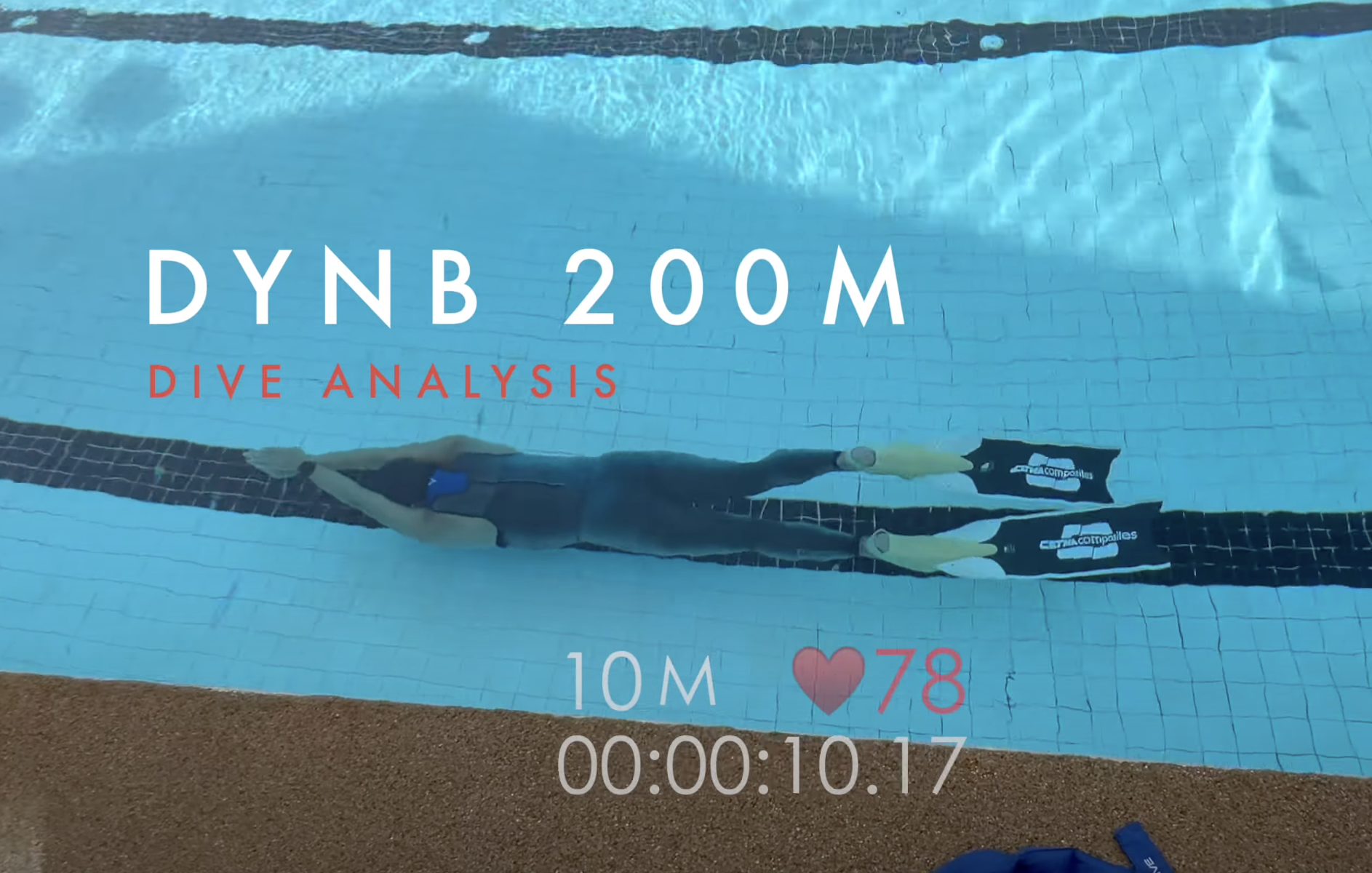
Dynamic bifins 200m
Additional explanation from the clip 🌊
1. Streamline Posture 🏊♂️
The posture with arms raised above the head, according to research, has 10-15% less drag than placing arms by the side. But if you feel that raising arms above the head strains your shoulders, I recommend placing arms by your side first, because Relaxation is also very important for Freedive. But if possible, I recommend trying stretching to make your shoulders move better to reduce drag.
2. Finning Technique 🐠
Finning, from my experience, depends on each person’s body, including the fins used. I recommend experimenting to see how wide of a kick suits you and your fins, including kicking frequency, and how many kicks before gliding or kicking continuously. All this must be tested to find what works, especially when changing to new fins. Personally, I still adjust my finning all the time to find a better form.
3. CO2 Training 💨
I didn’t talk much about this in the VDO. The key to Dynamic is CO2 tolerance. I train very often. For example, in the clip where I had no contractions, part of it was due to over-breathing, true, but another part is because I have very high CO2 Tolerance. I recommend practicing Dynamic CO2 tables if possible, but if you can’t get to a pool, try doing normal CO2 Tables. The key is to be able to do it continuously.
4. Mammalian Dive Reflex (MDR) 🐬
What many people don’t know is that we can train and trigger MDR to come faster. By training things like No Warmup Max or No Warmup Submax. If done often, it makes MDR come faster. And breathing affects MDR a lot. If you accidentally breathe too much as I said in the Clip, MDR will come slower, causing the heart to beat faster than it should, resulting in more Oxygen use than normal. I recommend letting the body control breathing itself, and relax as much as possible; MDR will come faster.
5. Know When to Surface 🏆
By sensing Hypoxia, is another skill that for me is necessary to have. Because it makes Dynamic diving much safer. Like in the VDO, I accidentally breathed too much until I didn’t have enough CO2 to warn me with discomfort, and Contractions. But if I can know when I start having Hypoxia, it allows me to surface safely before Blackout. However, training to feel Hypoxia is quite difficult, dangerous, and has side effects. For general people, it is not necessary to train, but for those diving very far and want to train, try consulting an instructor.
The main principle of training is, must train for fun. So we can train often. Must train hard enough but not too much that we don’t want to come back, or too light that no improvement happens, and must be consistent to see results. Simply put, enjoy the process! 🌟
Please like and share. If you have questions, you can ask in comments or chat with me! 💬
Never train dynamic apnea alone. Hyperventilation can suppress warning symptoms without preventing hypoxic blackout.